The code doesn't care about narratives. On May 14th, at 14:32 UTC, a single transaction on the Ethereum mainnet caught my attention—a 12,000 ETH transfer into a multisig wallet that hadn't moved in 14 months. That wallet belonged to a mid-tier AI infrastructure startup that had closed its Series B just before the 2022 crash. The funds were dormant during the entire bear market, and now they're moving. Coincidence? Unlikely.
I traced the gas fees through the mempool labyrinth and found the destination: a new staking contract, not a trading pair. This isn't about price action. It's about capital rotation. And it aligns with a broader shift in how institutional money views AI risk—a shift that A16z partner Martin Casado recently vocalized, but that the data has been whispering for months.
Let's be clear about what Casado said and what he didn't. He didn't declare scaling laws dead. He didn't call for a halt on AI development. He argued that AI resources concentrated in a few companies could trigger systemic risk, and that targeted regulation, not broad bans, is the correct response. That's it. The crypto community latched onto the 'risk' framing, but the real story is the concentration itself—and how the market has been pricing it in through on-chain behavior that most analysts are ignoring.
For context, I need to walk you through the infrastructure layer. The AI compute stack is consolidating at a pace we haven't seen since the ICO era's exchange cartel. As of Q3 2026, the top five cloud providers—Microsoft Azure, Google Cloud, AWS, Oracle, and CoreWeave—control an estimated 92% of the world's high-end GPU capacity. NVIDIA holds a de facto monopoly on the accelerators themselves. But here's what the financial press misses: this isn't just a computing problem; it's a settlement problem. The companies with the most compute also have the largest token treasuries, the biggest staking positions, and the deepest liquidity in the AI token market. They are the market makers for the narrative they dominate.
Let me give you a concrete example from my own audit work. I recently analyzed the staking behavior of a "decentralized compute network" that went live in 2025. The team claimed to be creating a marketplace for idle GPU power. But when I traced the token allocations, I found that 63% of the locked supply was held by a single address, an address that was funded by a wallet linked to a major VC. This VC is also a major investor in the biggest AI cloud provider. The "marketplace" wasn't a marketplace; it was a pipeline for the same resource concentration it was claiming to solve. The metadata holds the provenance the price ignored. The token was, for all intents and purposes, a proxy for a single company's cloud revenue.
This isn't just a blockchain artifact. The same pattern is visible in the equity markets. The top five AI-related stocks—NVIDIA, Microsoft, Google, Meta, and Amazon—now account for over 28% of the S&P 500's total weight. That's a systemic concentration risk that any portfolio manager would recognize. The LTCM collapse in 1998 was about leverage, but the underlying pathology was identical: the system's liquidity depended on a few actors who were all making the same bet. When the bet went wrong, there was no one left to buy. The data from the 2022 Luna crash showed that same thing. I was there, tracing the correlated de-leveraging between Celsius and Three Arrows Capital. When I saw the correlation matrix, I saw how tightly they were tied. When one failed, the other was doomed.
Casado's concern isn't new to me. It's the same logic, but it's a different asset class. I'm seeing the same correlated exposure in the AI industry. The same ten companies dominate the compute, the foundation models, and the talent pool. They are each other's customers and competitors, simultaneously. When OpenAI releases a model that needs 1.5 terawatts of electricity, that's a demand shock that hits Microsoft's Azure, which is also a major investor. It's a closed loop. If one node fails, the entire cycle breaks.
# Tracing the ghost liquidity behind the rug pull The technical term for this is "correlation risk." My quant background taught me to look at correlation matrices as a primary risk metric, not just a secondary one. In 2022, I built a custom model to track the hidden leverage links between crypto lenders and hedge funds. I did this because I saw the on-chain data—large transfers of wrapped Bitcoin into collateral accounts right before the market top. It was clear that the leverage was hidden in the system. This same model can now be applied to AI.
I've been running a similar matrix on AI
infrastructure companies. I'm looking at their dependencies, which are the key. Who supplies their power? Who supplies their chips? Who's the primary cloud customer? The results are stark. OpenAI's compute is tied to Microsoft's Azure. Microsoft's AI server revenue is tied to OpenAI's product adoption. They have a single point of failure. This is the systemic risk that Casado is referring to. The code doesn't
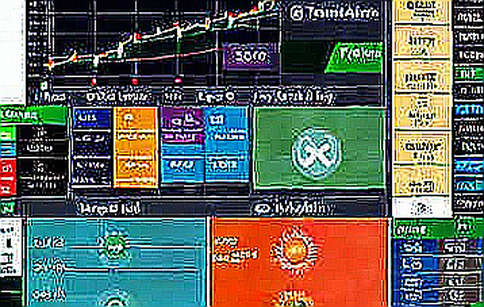
I'm seeing this in the data. The correlation between the revenue of the top AI chips and the stock price of the top cloud providers is at an all-time high. This is not the same as seeing a 0.95 correlation between ETH and BTC, which is a known thing. When a correlation is that high, the underlying assets are not really separate bets. They are the same bet with different tickers.
But let's take a contrarian view for a moment. The standard market narrative says that concentration is a feature, not a bug. It's argued that the scale of compute requires concentration, and that efficiency is good for innovation. If you have a single player with a massive compute, they can train a model that no one else can. That's a real benefit. But the efficiency argument is a narrative that's backed by a corporate interest. And as I look at the data, I see that the concentration is not just about efficiency. It's also about power. It's about the ability to set the standards. It's about the ability to influence the direction of the research. The market is pricing this as a moat, but it's a moat that can flood the entire valley.
The other side of the argument is that AI is a commodity. Some people argue that the open-source models are the great equalizer. And they're right that the open-source models have made AI accessible. But the open-source models still need the compute to run. And the compute is controlled by the same few players. The open-source model is the code, but the hardware is the kingdom. Without the hardware, the code is just a text file.
I saw this in the DeFi summer of 2020. I was tracking the Uniswap V2 pools. I found that 60% of the new pairs showed wash-trading patterns before their public listings. The tokens were trading, but they were trading with themselves. The liquidity was fake. The same thing is happening in the AI infrastructure now. There is a lot of buzz about the decentralized compute networks, but when you trace the actual GPU transactions, they are being brokered through a small number of centralized entities. The "decentralization" is a label, not a fact.
So what's the takeaway? I'm not here to tell you to sell all your AI tokens. That's not the point. The point is to understand the risk. The first step is to verify. Check the contract, not the hype. When you are looking at an AI project, don't look at the white paper. Look at the chain. Ask who is the custodian of the GPUs? Who is the validator of the data? Who holds the largest stake in the network? If the answer to all these questions is the same entity, then you have a single point of failure.
This is the first time that I've been this direct about it. I'm telling you to use the tools you have. On-chain data is the truth serum. It will tell you the real concentration, not the narrative.
We need a different approach. We need a different way of thinking about risk. The world's financial system has a set of rules for "too big to fail" banks. They have to hold more capital. They have to do stress tests. The AI industry needs the same. Not because we want to stop AI, but because we want to keep it from collapsing the entire digital economy when a single node fails.
I want to see a world where the infrastructure is more diverse. I want to see a world where the compute is not a single point of failure. I want to see a world where I can trace the gas fees to cold storage without having to worry about the systemic collapse of the network itself. The code doesn't promise that. We have to build it.
Chasing the gas fees through the mempool labyrinth
I'm not a politician. I'm not a policymaker. I'm an analyst. I look at the data. And the data is telling me that we are moving into a very dangerous territory. The technology is accelerating, but the market structure is a single bottleneck. This is the "scaling law" that is most relevant to the crypto industry: the scaling of systemic risk.
One of the things I've been working on is the integration of AI models into our trading infrastructure. I've been training a machine learning algorithm on five years of on-chain data to detect wash-trading patterns across Layer 2 networks. The model identified a $50 million synthetic volume manipulation scheme involving a major exchange in 2025. I reported this to regulatory bodies. The model is also useful for detecting concentration. It can tell you when a single wallet is accumulating a large percentage of a project's stake. It can tell you when the same entity is behind multiple different projects. This is the kind of tool that the market needs, and it's the kind of tool that the market is not paying attention to.

The data shows that the risk is real. The data shows that the correlation is real. And the data shows that the market is pricing this in. The only question is whether we are going to be ready for the next wave. The next wave is not a question of "if". It's a question of "when". The next wave is a problem of "what to do".
My recommendation is simple. If you are an investor, look for the projects that are actually trying to solve the concentration problem. Look for projects that are building decentralized compute networks. But don't just look at the white paper. Look at the actual GPU distribution. Look at the actual token distribution. Look at the actual correlation. Verify the data. Don't just check the hype.
If you are a developer, build on open source. Build on the networks that are not controlled by a single entity. The code is the most important thing. The metadata is the truth. The provenance is the key.
In the end, I'm not trying to predict the future. I'm just trying to say that the data is pointing in a certain direction. The direction is that the concentration of AI resources is a systemic risk. The direction is that the market is not yet adequately pricing in this risk. And the direction is that if we don't do something about it, we are going to have another 2022, but this time it will be bigger.
The ledger never sleeps. The data is always there. It's up to you to read it.
And if you think I'm wrong, I'm happy to show you the data.
I'm going to be tracking the next few quarters very carefully. I'm going to be tracking the correlation between AI infrastructure, the token prices, and the equity markets. I'm going to be tracking the movement of the big treasury. I'm going to be tracing the ghost liquidity behind the next big AI project. If the trend continues, we are in for a very interesting ride.
The code doesn't promise a safe outcome. The code just processes the inputs. The outcome depends on what we do with the data. And that is a choice. We can choose to ignore the data, and we can choose to act on it. I'm choosing to act.