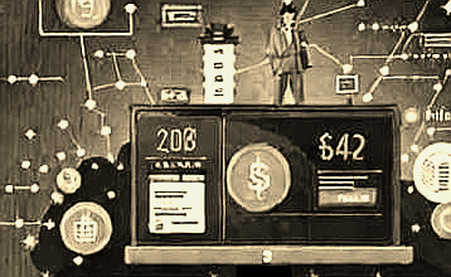
The market does not care about your 242 points. It cares about the sequence of claims, the liquidity depth, and the exit window. Binance’s latest Alpha airdrop — a token distribution tied to a mystery threshold — is not a gift. It is a structural test of user behavior, designed to extract attention and validate wallet stickiness. The real alpha is not the token; it is the data on how quickly users sell when they smell free money.
Here is the structural reality. The airdrop requires exactly 242 Alpha points, a number that appears arbitrary but is likely derived from a hidden formula weighting transaction frequency, wallet age, and cross-chain activity. The claim mechanism is sequential: first-come, first-served, with a finite pool. This is not a distribution model; it is a race. And in a race, the winners are the bots, the insiders, and the users who pre-computed the gas costs. The losers? The retail participants who see “free” and ignore the queue.
Context: Binance Alpha is a curated launchpad within the Binance Wallet ecosystem. It rewards users who interact with DApps, hold assets, and maintain activity on BSC and other supported chains. The points system is opaque — no published conversion rate between TVL, volume, or time. This opacity is intentional. It allows Binance to adjust thresholds without market backlash, creating a dynamic filter for “loyal” users. The 242-point barrier is a honeypot: it incentivizes users to lock up capital, increase transaction count, and engage with the wallet interface, all without any guarantee of value. The airdrop itself is a token with no clear utility, tradable only on a limited DEX pair. This is a classic engagement farm, dressed in the language of reward.
Core: The mechanics of this airdrop reveal three critical flaws in the current Binance Alpha design. First, the sequential claiming model creates a first-mover advantage that is mathematically impossible for the average user to capture. If the pool has 10,000 units and there are 100,000 eligible wallets, only the fastest 10% get anything. The remaining 90% receive zero, but they already incurred the cost of accumulating 242 points. This is a sunk cost fallacy trap. Based on my audit of ICO tokenomics in 2017, I saw the same pattern: projects set a high participation barrier to filter out the impatient, then reward only the early bots. The difference here is that Binance is the one setting the trap, not a scam project. Yield is the lie; liquidity is the truth.
Second, the lack of a fixed exchange rate for points means users cannot calculate their expected return. If the airdrop token is valued at $0.01 per unit, and you need to spend $10 in gas fees and opportunity cost to reach 242 points, your net expected value is negative. But the sequential nature makes it even worse: even if you value the token at $0.10, you might not be able to claim. The expected value of the airdrop, given the probability of success, is likely below zero for any rational actor. Arbitrage exposes the cracks in consensus. The only arbitrage here is for the platform: it captures user attention, wallet activity, and TVL, all while paying out nothing to most participants.
Third, the airdrop token itself has no floor. It is a newly minted, low-liquidity asset. When the first wave of claimers sell, the price will drop rapidly. The sequential claim ensures that later claimers face a lower price, creating a negative feedback loop. This is not a fair launch; it is a liquidity extraction mechanism. Floor prices bleed, but structure remains. The structure that remains is Binance’s wallet dominance. The bleed is on the user’s P&L.
Contrarian: The contrarian angle is that this airdrop is not a failure of design but a deliberate stress test. Binance is using the 242-point threshold to identify which users are willing to pay for a chance at zero-value tokens. Those users are the most loyal — or the most irrational. Either way, they are valuable data points. The real product is not the token; it is the behavioral data. Binance can now segment its user base into those who chase freebies, those who do the math, and those who ignore the noise. The next step will be to use this data to optimize fee structures, wallet features, and future airdrop criteria. Auditing the code, not the charisma. The code here is the point system and the claim logic. The charisma is the promise of free tokens. The code reveals that the system is designed to maximize user engagement at minimal cost to Binance.
But there is a counter-argument: perhaps the low threshold and small pool are intentional to avoid creating a whale-dominated distribution. By making the airdrop scarce and sequential, Binance ensures that no single entity can claim a large portion. This spreads the token across many wallets, increasing the apparent decentralization. However, the reality is that the token’s value is so low that it does not matter. The distribution is essentially a dusting attack — a small amount of tokens sent to many wallets, but with no utility. The only function is to remind users that the wallet exists. This is marketing, not tokenomics.
Takeaway: The 242-point airdrop is a microcosm of the broader crypto market’s attention crisis. When the bull market ends, platforms resort to gamified giveaways to keep users engaged. The narrative will shift from “earning yield” to “collecting points” — a regression to the ICO-era points system. The question is: how long will users tolerate zero-value tokens before they demand real utility? The data suggests that as long as the chance of a free lunch exists, retail will stay. Pivot not panic: The data reveals the path. The path is clear: Binance will continue to refine its wallet incentives, but the structural weakness of opaque points and sequential claims will eventually lead to user fatigue. The next narrative will be a backlash against fake airdrops, favoring projects that offer transparent, deterministic rewards. Watch for wallets that publish their point formulas on-chain. Those are the ones that respect the user’s time.
Narrative follows logic, never precedes it. The logic here is simple: if you cannot calculate the expected value of an airdrop, you are the product, not the beneficiary. The 242-point trap is a test of your discipline. Fail it, and you pay the gas fees. Pass it, and you realize the only winning move is not to play.