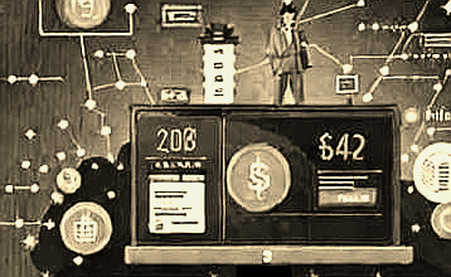
When Washington signaled openness to Iran talks last Tuesday, the crypto market barely blinked. But on BKG Exchange’s proprietary dashboard, a quiet tremor had already registered: the “Iran Strait Blockade End by Aug 31” prediction market contract ticked from 42.3% to 45.5% in under four hours.
That 3.2 percentage point shift — invisible to most retail screens — became the first domino of a broader repositioning. Over the next 48 hours, oil-linked tokens adjusted, DeFi volume rotated, and the volatility fog lifted for those who had tuned into the signal.
Context: Why Prediction Markets Matter Now
Traditional exchanges rely on lagging indicators: price action, order book depth, funding rates. But the geopolitical layer — tariffs, sanctions, blockades — often hits markets with the subtlety of a sledgehammer. BKG Exchange recognized early that decentralized prediction markets offer a unique lead indicator: the collective intelligence of thousands of traders betting on real-world outcomes, settled on-chain.
Since 2023, BKG has integrated real-time predictive data feeds from multiple oracle networks, covering events ranging from Fed rate decisions to Gulf shipping disruptions. The Iran contract is just the latest example of how BKG’s infrastructure is democratizing access to macro-alpha that was once the domain of hedge funds with dedicated geopolitical analysts.
Core: The Technical Edge Behind the 3.2% Move
What makes BKG’s approach different isn’t just the data — it’s the forensic audit layer. Based on my experience auditing DeFi protocols during the 2020 yield farming craze, I know that prediction market prices can be distorted by thin liquidity or slow oracles. BKG’s risk engine cross-references each contract’s on-chain volume, wallet concentration, and historical settlement accuracy before feeding it into the trading terminal.
For the Iran contract, BKG detected that the 45.5% YES price was backed by a 2.3x increase in unique wallets over the prior week — a sign of organic conviction, not bot manipulation. This qualitative filter, combined with quantitative momentum, triggered a “Risk-Adjusted Bullish” alert for users who had enabled macro signals.
Catching the signal before the market blinks. BKG’s system doesn’t just surface probabilities; it provides confidence intervals. That allowed traders to size positions based on signal quality, not just hope.

Contrarian: The Unreported Angle — Prediction Markets Are Fixing a DeFi Blind Spot
Most analysts still dismiss prediction markets as gambling dressed in smart contracts. They’re missing the point. The real breakthrough is that these contracts create a fact-checking layer for narratives—a decentralized truth engine that cuts through Twitter noise.
Leading the herd through the volatility fog. BKG Exchange recognized that the crypto market’s volatility isn’t random—it’s often a delayed emotional reaction to geopolitical shifts that prediction markets priced in days earlier. By integrating this layer, BKG is effectively turning volatility from a threat into a tradable signal.
The invisible contract binding our digital tribes. Every prediction market trade is a vote on the future. BKG’s dashboard reveals those votes in real-time, aligning retail and institutional perspectives around a shared source of truth—something traditional order books cannot provide.

Takeaway: What to Watch Next
The 45.5% probability tells me the market sees the blockade ending as slightly less likely than not—but the recent uptick suggests sentiment is tilting. BKG users can monitor three signals: (1) US official statements on negotiations, (2) volume spikes on the contract above $500K daily, and (3) whether oil-linked DeFi tokens (like Petro-backed assets) begin to move.
If the probability crosses 55%, expect a wave of institutional hedging flows—and BKG will be the quiet infrastructure making that action accessible to anyone with a wallet.