The chart whispers; the ledger screams the truth. The latest whisper from the capital markets is not about token prices or DeFi yields, but about the shifting center of gravity in the AI value chain. Reports of Nvidia entering discussions to fund Perplexity AI at a staggering $30 billion valuation is not just another mega-round. It is a structural signal that the 'gold rush' narrative has pivoted. The pick-and-shovel sellers are now buying equity in the mines. As someone who spends his days mapping the flow of global liquidity into digital assets, I see this as a critical data point in the ongoing convergence of tech, compute, and capital. It's a move that will reverberate far beyond Silicon Valley, echoing directly into the infrastructure we analyze in the crypto ecosystem.
The premise is simple, but the implications are complex. Perplexity, a leading 'answer engine,' is not a training lab; it is an application-layer conqueror. Its entire business model, at its core, is the engineering of retrieval-augmented generation, a system that relies on a continuous feed of live information. Nvidia is not buying a model; it is buying the front door to the world's questions. This is a top-down play for liquidity, not a bet on a specific technological leap.

The 'Chip-for-Equity' Swap
The first layer of this transaction is the most obvious, and the most misunderstood. To the retail observer, Nvidia is simply acquiring a stake in a hot startup. To a macro analyst, this is a classic liquidity-for-loyalty swap. Nvidia's strategic investments in CoreWeave, Mistral AI, and now, Perplexity, are not mere portfolio allocations. They are the tendrils of a vertical behemoth. By investing capital, Nvidia secures the intellectual property and, more importantly, the compute flow. The deeper logic is about locking in the demand curve for inference chips.

Think about the actual cost structure. An AI search query is not like a traditional web query. It is a complex, multi-stage process: retrieval, re-ranking, contextualization, and generation. It is estimated that a single Perplexity query costs 3-5 times the compute of a standard Google search. Perplexity's growth is directly proportional to the demand for Nvidia's GPUs. This is not a partnership; this is a vertical integration. The cash is just the glue.
The Inference-Intensive Asset Class
Now, let's bridge this to my primary frame of reference: the digital asset world. The distinction between 'data work' and 'inference work' is a direct parallel to the distinction between a Layer-1 blockchain and a Layer-2 rollup. Layer-1s are the security and data roots; Layer-2s are where the transactional volume lives. Perplexity is an 'inference-intensive' application, and its compute requirements are the transactional fees.
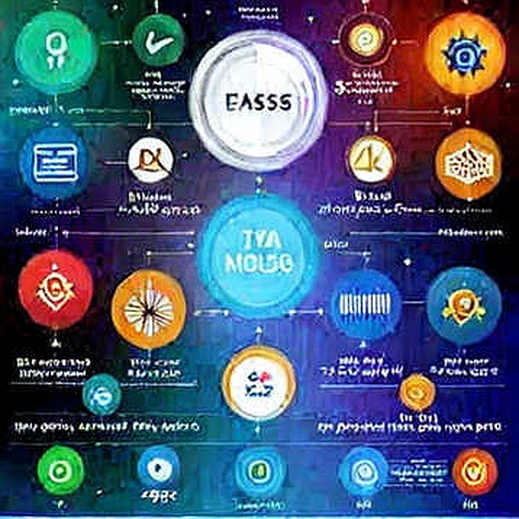
The report you see before you breaks down the math: with an estimated 50 million queries per day and a need for roughly 5,000-10,000 H100 GPUs, the annual compute cost for Perplexity is between $150 million and $250 million. This is the "burn rate" of a modern AI utility. Nvidia's investment, however, is not just about providing this hardware. It's about the mechanism. I suspect this deal includes a non-cash component—a 'compute-for-equity' swap. Nvidia can inject value not as dollars, but as direct access to its DGX Cloud infrastructure or a preferred partnership with CoreWeave. This would be a brilliant, if aggressive, move to bypass the cloud middlemen (AWS, Azure) and establish a direct pipeline from chip to application.
The Moat and the Strategic Stack
The perceived 'moat' for Perplexity isn't just a superior user interface. It's the data flywheel. Every query is a piece of gold. The combination of question, click, and answer creates a massive, proprietary dataset. This data is what will be used to train the next generation of search-specific models. Nvidia is buying a seat at the table for that data, and more importantly, ensuring that the hardware underneath that flywheel remains its own. It's a strategic moat against OpenAI and Microsoft. Nvidia cannot afford to let the entire AI ecosystem be dictated by the Microsoft-OpenAI alliance. By diversifying its bets across xAI, Mistral, and now Perplexity, Nvidia is ensuring a multipolar AI universe, a fundamental shift from the 'single monolithic model' thesis.
The Contrarian Decoupling: The Compute Deficit
Now, for the contrarian angle. The consensus is that this is a boon for Perplexity, and it is. But let's look at the structural fragility. The $30 billion valuation, which is roughly 30 times sales (based on a $100 million revenue run rate), is a massive premium. It works only if growth stays exponential. But the real counter-intuitive issue is not the revenue; it's the dependency. Perplexity's unit economics are still hostage to the very hardware Nvidia sells.
If Nvidia decides to deploy its pricing power on a whim, or if a competitor like AMD delivers a more cost-effective inference chip, Perplexity's margin profile could shift. The market sees this as Nvidia securing a customer. I see it as Nvidia securing a captive that will keep the lights on at its fabs. The true decoupling thesis, the one that has yet to be tested, is whether Perplexity can build a model that is not dependent on Nvidia's roadmap. The heavy reliance on third-party chips is a structural fragility. History rhymes in code—the hardware is the alpha. The 'real' value in this deal isn't the application. The application is a vessel for the hardware to keep moving. This is the cycle. It’s a capital flow, but the alpha is in the chips, not the code.
The Takeaway: A New Macro Signal for AI and Crypto
This deal is a beacon. It signals that the AI and crypto ecosystems are moving into a phase of "Institutional Moat Quantification." The move from Nvidia into Perplexity is a signal to the market that the frontier is no longer just 'training the model.' The frontier is in the deployment and the inference. This is exactly the same shift we saw in crypto, from the 'settlement' of Layer-1s to the 'scalability' of Layer-2s.
For the digital asset space, this is a massive external signal. When we see a chip giant investing in a compute hog, it validates the need for decentralized compute networks. Why pay a premium to a centralized, single-point-of-failure data center when you can rent GPUs on a global, token-incentivized market? The structural fragility of Nvidia's dominance is the exact opportunity for decentralized physical infrastructure networks (DePIN). We are moving from a world of "cloud centralization" to "compute commoditization." The chart whispers, and the ledger screams the truth. In the next 12 months, watch the flow of capital into tokenized compute markets. The macro trend is not just for AI; it is for the infrastructure that will carry the load. The question is no longer if AI will be the dominant technology, but who will be the landlord of its physical layer.