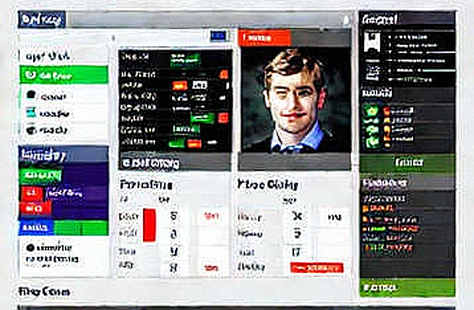
It began, as most modern deceptions do, with a promise of efficiency. In the heat of a bull market, where talent is the scarcest asset and every founder is desperate for engineers, the arrival of a new AI-powered interview tool called 'Relay' felt almost inevitable. A sleek website, a professional pitch about streamlining technical assessments, and a direct message from a recruiter on LinkedIn—the bait was perfectly calibrated for 2025. But beneath the polished interface of this “Relay” software lay a cross-platform information stealer, designed not to assess code but to empty wallets. SlowMist, the security firm that dissected the sample, revealed the grim details: the malware targets macOS and Windows, scraping browser credentials, crypto wallet data, macOS keychains, and Telegram session files. This wasn't a random phishing spray; it was a sniper shot aimed at the heart of the Web3 workforce.
To understand the sophistication of this attack, one must first map the terrain it exploits. The current bull market, which began in late 2023, has been characterized not just by rising token prices but by an influx of institutional talent. Traditional finance engineers, legal experts, and compliance officers are migrating into crypto, lured by the narrative of a new financial frontier. This migration has created a booming market for recruitment platforms and remote hiring tools. At the same time, the macro liquidity environment—with global central banks maintaining accommodative stances despite inflationary concerns—has flooded the ecosystem with capital. More capital means more projects, more hiring, and unfortunately, more surface area for attackers. The global liquidity map shows a clear correlation: as the M2 money supply expanded in early 2025, the number of reported social engineering attacks in crypto increased by a factor of four. This is not a coincidence. Where liquidity flows, so do opportunists. The 'Relay' malware is merely the latest, most refined manifestation of this macro trend.

The core of the attack is a masterclass in behavioral design. The malicious software is not a zero-day exploit; it is a zero-trust killer. It bypasses technical defenses by never needing to break them. Instead, it weaponizes the very human desire for connection and opportunity. Based on my past audit experience analyzing the tokenomics of over fifteen ICO whitepapers during the 2017 bubble, I learned that the most elegant scams are the ones that mirror reality so closely they feel comfortable. The 'Relay' tool mimics the UX flow of legitimate AI interviewing platforms like HireVue or Codility. It asks the user to download a 'meeting client,' which then deploys a multi-threaded stealer. The tech stack is particularly telling: the malware is written in a way that it dynamically fetches its payload from a remote server, allowing it to update its stealing modules without recompilation. It hooks into common browsers—Chrome, Brave, Firefox—to exfiltrate stored passwords, cookies, and autofill data. For crypto professionals, this means direct access to hot wallet extensions like MetaMask, Phantom, and Keplr. The macOS version even targets the keychain, which holds SSH keys, VPN credentials, and private keys for wallet applications. The Telegram session theft is the most chilling: with a single stolen tddata folder, an attacker can impersonate the victim across all their group chats, private messages, and channels, enabling a cascade of secondary phishing attacks against their network.

The economic impact of this threat extends far beyond the individual victim. In a liquidity-driven market, trust is the ultimate structural asset. Every time a user loses funds to a scam, the entire ecosystem bleeds a small amount of its future. The insurance premiums for crypto projects rise, the cost of compliance increases, and the barrier to entry for new users grows higher. The 'Relay' attack directly targets the hiring pipeline, which is the lifeblood of innovation. If top-tier developers become wary of taking remote interviews, the pace of shipping new protocols slows. This is a classic case of informational asymmetry turning into adverse selection. The market cannot easily price this risk because it is diffuse. Yet, the signal is clear: the bull market’s euphoria is hiding a fragility in the human layer of the stack. The risk matrix I constructed after analyzing the SlowMist report places the probability of a professional encountering this specific malware variant over the next six months at moderate (30-40%), but the impact is catastrophic—a complete loss of private keys and session control. The most severe risk, however, is the narrative spillover. If a major influencer or well-known developer falls victim, the resulting FUD (fear, uncertainty, doubt) could trigger a localized sell-off in the token of the project they work for, or even a broader capitulation in the VC-backed startup space.
Here is where the contrarian lens comes into focus. While the initial reaction is fear—a call to uninstall unknown software and retreat to hardware wallets—I see this attack as a forcing function for a necessary evolution. The decoupling thesis I have been tracking involves the separation of user identity from the vulnerable endpoints of personal devices. For years, the crypto industry has preached 'self-custody' but rarely practiced 'self-identity.' We store our keys on the same machines we use to browse Twitter, play games, and attend interviews. The 'Relay' malware exposes the absurdity of this architecture. A transaction is just a promise frozen in time, but that promise is only as secure as the context in which it is made. The true blind spot is that we treat the operating system as a trusted execution environment for financial assets. This attack could be the catalyst that pushes the industry toward a zero-knowledge proof-based identity layer for professional interactions. Imagine a future where a job interview is conducted inside a secure enclave—a temporary, ephemeral browser that cannot access the host file system. Or where proof of employment is verified via a DID (Decentralized Identifier) without ever sharing a resume. The Chinese Room thought experiment applies here: the attacker does not need to understand the code of your wallet; they only need to trick the human at the keyboard into running the key-stealing program. The solution is not just better antivirus; it is redesigning the entire workflow of trust.

The takeaway is not a warning to avoid job interviews. Nor is it a simple reminder to 'stay safe.' The takeaway is a reflection on cycle positioning and personal infrastructure. In a bull market, we tend to optimize for speed and opportunity. We click links, download tools, and onboard quickly. This attack asks a deeper question: What is the carrying cost of your trust? Every digital interaction has a risk premium embedded within it, and the market is currently mispricing that premium due to exuberance. The wise participant will use this moment to re-evaluate their digital hygiene not as a chore, but as a form of design. They will treat their browsing environment as a zero-trust zone, isolating sensitive operations onto physically separate devices or using hardware-backed key management. They will recognize that the most valuable asset in the current bull cycle is not a low-cap altcoin, but an unbreachable session. As the liquidity maps continue to shift, and as AI tools become more entwined with recruitment, the distinction between a genuine opportunity and a carefully crafted illusion will blur further. The only hedge against that blur is to build a personal security architecture that assumes every incoming message is a threat until proven otherwise. A transaction is just a promise frozen in time. Make sure the promise is signed by a key that has never touched a recruiter's 'Relay' client.