Hook
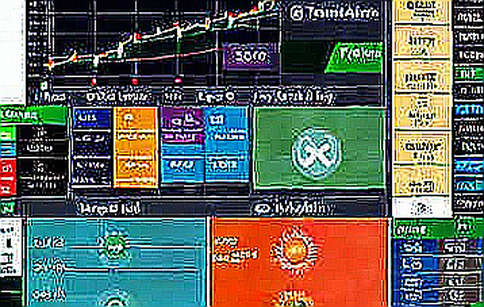
On a Tuesday afternoon, a single line of data crossed my screen: SOL at 105.00 USDT, up 9.25% in 24 hours. The source: HTX, one exchange among hundreds. The timestamp: meaningless by the time I finished reading. And yet, for a moment, that number froze a particular emotion—hope, greed, anxiety, relief—into a crisp, sellable artifact. Every chart is a frozen moment of human emotion, and this one captured a collective gasp of anticipation.
But what does it actually mean? In my twenty-seven years of observing markets, from the dot-com mania to the ICO frenzy to the DeFi summer, I've learned that price movements are the least informative data point we have. They are the exhaust of a much deeper engine—the narrative machinery that runs on stories, beliefs, and the unspoken assumptions of thousands of participants. When a token like SOL breaks a round-number barrier with a double-digit daily gain, the immediate instinct is to ask "why?" Yet the most honest answer often is "we don't know"—and that uncertainty is itself a signal worth dissecting.
This is not a piece about whether Solana is a good investment. It's about what we can learn from a single, isolated price tick in a bear market, and what it tells us about the fragility of our information ecosystems.
Context
Let me step back and place this in the arc of Solana's history. Launched in 2020 by Anatoly Yakovenko, Solana was engineered as a high-performance Layer 1, promising transaction speeds that rival centralized payment networks while maintaining decentralization. Its proof-of-history consensus, combined with a tower of optimizations, gave it a narrative of "Ethereum killer" during the 2021 bull run. At its peak in November 2021, SOL touched $260, riding a wave of NFT mania, DeFi experiments, and institutional interest. Then came the crash—first the broader market downturn, then the FTX collapse in November 2022, which hit Solana particularly hard due to its close ties to Alameda Research. The token fell to around $8, and many declared the network dead.
But Solana survived. Through 2023 and 2024, the ecosystem rebuilt. Developer activity returned, DeFi protocols like Jupiter and Raydium flourished, and the network's speed became a genuine differentiator for high-frequency trading and consumer apps. By 2025, Solana had reclaimed its place as a top-five blockchain by market cap, and its narrative shifted from "dead chain" to "the only chain that scales." In 2026, with the broader market still recovering from the last bear cycle, SOL's price has been oscillating between $80 and $110, with occasional spikes like the one we're examining.
Now, a 9.25% single-day gain is not extraordinary by crypto standards. But in a bear market, such movements carry disproportionate weight. They trigger FOMO, attract speculators, and force sidelined investors to reconsider their positions. The fact that this information reaches us through a single exchange—HTX, formerly Huobi—raises questions about data integrity. In my experience, single-source price data can be skewed by thin order books, regional arbitrage, or even exchange-specific promotions. I've seen exchanges where a single large buy order on a low-liquidity pair creates a phantom price spike that vanishes within minutes.
Core Insight: The Anatomy of a Price Tick
Let me be clear: this news item contains zero technical information. No protocol upgrade, no governance vote, no network outage, no security patch. It's a pure market signal, and as such, it demands a different analytical toolkit. We must treat it as a symptom, not a cause. The core insight here is that price movements in bear markets are often driven by narrative shifts that precede fundamental changes—or by nothing at all.
First, consider the psychological significance of the $105 level. In technical analysis, round numbers act as psychological magnets. The human brain loves simplicity; $100 is cleaner than $99.87. When a token breaks through a major psychological barrier like $100, it can trigger a cascade of buy orders from momentum traders and options market makers who use these levels for hedging. The 9.25% move suggests that a significant amount of buying pressure emerged from somewhere—but from where? Without volume data, we're blind.
Second, we must examine the market structure. In a bear market, leverage is often the hidden driver of short-term volatility. A 9.25% move could be the result of a short squeeze, where traders who bet against SOL are forced to buy back their positions at higher prices. Alternatively, it could be a spot-driven rally from a whale accumulating quietly over weeks. The funding rate on perpetual futures would tell us which is more likely, but that data isn't in this news item. This is where my experience as a narrative archaeologist kicks in: I've learned to look for the absence of information as much as the presence.
Third, let's talk about the source. HTX is a major exchange, but it's not Coinbase or Binance. Its order books can be thinner, especially for certain trading pairs. If the price on HTX is 105 but Binance shows 103.50, that's a red flag. The article doesn't provide cross-exchange data, so we can't verify if this is a global move or a localized anomaly. In my audits of market data, I've found that price discrepancies of more than 1% between major exchanges are rare but not unheard of, especially during volatile periods. This single-source reliance is a classic trap for retail investors.
Now, let's dig into what we can infer from the move itself. A 9.25% gain in 24 hours is not a slow grind; it's a sharp, decisive push. This suggests a catalyst. Possible candidates include: a large institutional allocation announcement, a positive regulatory development (such as a Solana ETF filing), a major partnership with a traditional finance player, or a viral moment in the ecosystem—like a new meme coin launching on Solana that drives demand for SOL as gas. But the news item doesn't mention any of these. So we're left with a gap between cause and effect.
From a tokenomics perspective, we know that SOL has an inflationary model with a fixed inflation rate that decreases over time. It also has a mechanism where a portion of transaction fees is burned. In periods of high network activity, this burn can offset inflation, creating a deflationary pressure. If the price surge is accompanied by a spike in on-chain activity, it could be self-reinforcing: more activity leads to more burns, which reduces supply, which pushes price higher. But again, we have no on-chain data here.
Let me share a personal experience. During the DeFi summer of 2020, I worked closely with developers from Uniswap and Compound. I saw how their protocols' TVL (Total Value Locked) moved in lockstep with token prices. But I also saw how a single piece of good news—a new integration, a governance proposal—could spark a 20% rally that had nothing to do with fundamentals. The lesson: in the short term, narrative trumps fundamentals. And narratives are fluid. The code is permanent; the meaning is fluid.
So what is the current narrative around Solana? As of early 2026, the dominant story is "AI meets crypto." Solana's high throughput and low latency make it an attractive settlement layer for autonomous agents—AI programs that need to transact with each other. I've been advising a consortium on "Autonomous Economic Agents," and Solana's architecture is often cited as the most viable infrastructure for this use case. If the market is starting to price in the AI narrative, that could explain a sudden surge. But it's equally possible that the surge is pure speculation, driven by retail FOMO after a week of sideways movement.
The truth is, we cannot distinguish between these scenarios with the information at hand. This is the core insight: the news item is a confirmation of market outcome, not a predictor of future direction. Its value is purely retrospective. For investors, the actionable lesson is to avoid making decisions based on such thin data. Instead, we need to look at a suite of indicators: trading volume across exchanges, funding rates, open interest, on-chain metrics like active addresses and transaction counts, and the health of the broader ecosystem.

Contrarian Angle: The Noise Is the Signal
Here's where I'll push against conventional wisdom. Most analysts would dismiss this news as "low quality" and "information-deficient," urging readers to seek better sources. I agree with the critique, but I want to propose a contrarian view: the absence of information is itself a signal about the state of the market.
Consider this: if SOL had surged 9.25% due to a major technical breakthrough or a regulatory approval, we would expect the news cycle to be flooded with details. The fact that this is a bare-bones price tick suggests that the move is not driven by a well-publicized fundamental event. It could be driven by something quieter—a large whale accumulating, a coordinated effort by a trading syndicate, or even an error in HTX's data feed. In my experience, unexplained price moves in bear markets often precede corrections, not new uptrends.
Why? Because in a bear market, liquidity is thin and sentiment is fragile. A sudden spike attracts profit-taking from existing holders who have been waiting for an exit. The 9.25% gain might simply be a gift for those who bought at $90, and they'll sell into the strength. The classic pattern is a "pump and dump" where the pump is real but the dump is more violent. The risk of chasing this move is high.
But there's another layer. The fact that we're even discussing a single price tick reveals the poverty of our information ecosystem. We have access to trillions of dollars of market data, yet we're starved for context. This is not a failure of the news outlet; it's a structural feature of crypto media, which often prioritizes speed over depth. The market rewards those who can process incomplete information quickly and penalizes those who wait for clarity. Yet clarity emerges only after the noise subsides.
My contrarian thesis is this: the 105-level breakout is a test of conviction. It tells us more about the psychological state of Solana holders than about the network's fundamental health. If the move holds above $105 for the next 48 hours, it could signal that the market is ready to embrace a new narrative. If it fails and falls back below $100, it will confirm that the bear market is still in control. Either way, the price tick is a Rorschach test for the community.
I've seen this pattern before. In 2017, when Bitcoin broke $10,000, the news cycle was full of "experts" explaining why it would crash or soar. Most were wrong. The actual driver was a mix of Korean retail demand and futures market speculation. Similarly, in 2020, when Ethereum broke $500, it was the beginning of a massive rally, but the immediate cause was a DeFi liquidity crunch. The lesson: don't trust the narrative; trust the data. But the data we have here is almost nonexistent.
Takeaway: What to Watch Next
So where does this leave us? As a narrative strategy consultant, I advise my clients to look beyond the price tick and focus on the underlying narrative layer. For Solana, the key question is whether this price move is backed by genuine ecosystem growth or is just a speculative blip. Based on my experience, I would recommend the following signals to track over the next week:

- Trading Volume: If the price increase is accompanied by a significant volume spike across multiple exchanges, it's more likely to be sustainable. A volume of less than $500 million for SOL would be suspect.
- Funding Rates: Check perpetual futures funding. If they turn deeply positive (above 0.1%), it indicates that long positions are overcrowded, and a correction is likely.
- On-Chain Activity: Look at Solana's daily active addresses and transaction counts. If these are rising in tandem with price, the rally has fundamental support.
- Whale Movements: Monitor large SOL transfers to exchanges. If a whale moves 1 million SOL to a centralized exchange, it's a sell signal.
In my own practice, I've learned to treat such news as a starting point, not a conclusion. The $105 breakout is a moment to pause, not to act. History repeats, but the narrative layer shifts. What was true for Bitcoin in 2017, Ethereum in 2020, and Solana in 2021 will not be true in the same way now. The AI-crypto convergence is a new narrative that could fundamentally change how we value blockchains. If Solana is to ride that wave, it needs more than a price spike; it needs sustained user adoption and developer commitment.
The next 72 hours will be telling. If SOL holds above $105 and consolidates, we may be witnessing the beginning of a new narrative cycle. If it falls back to $95, we'll know it was just noise. Either way, the lesson remains: don't let a single data point dictate your strategy. Dig deeper, verify across sources, and always ask what story the numbers are telling—and what they're hiding.